Dear Theophilus , (Letter 49. )
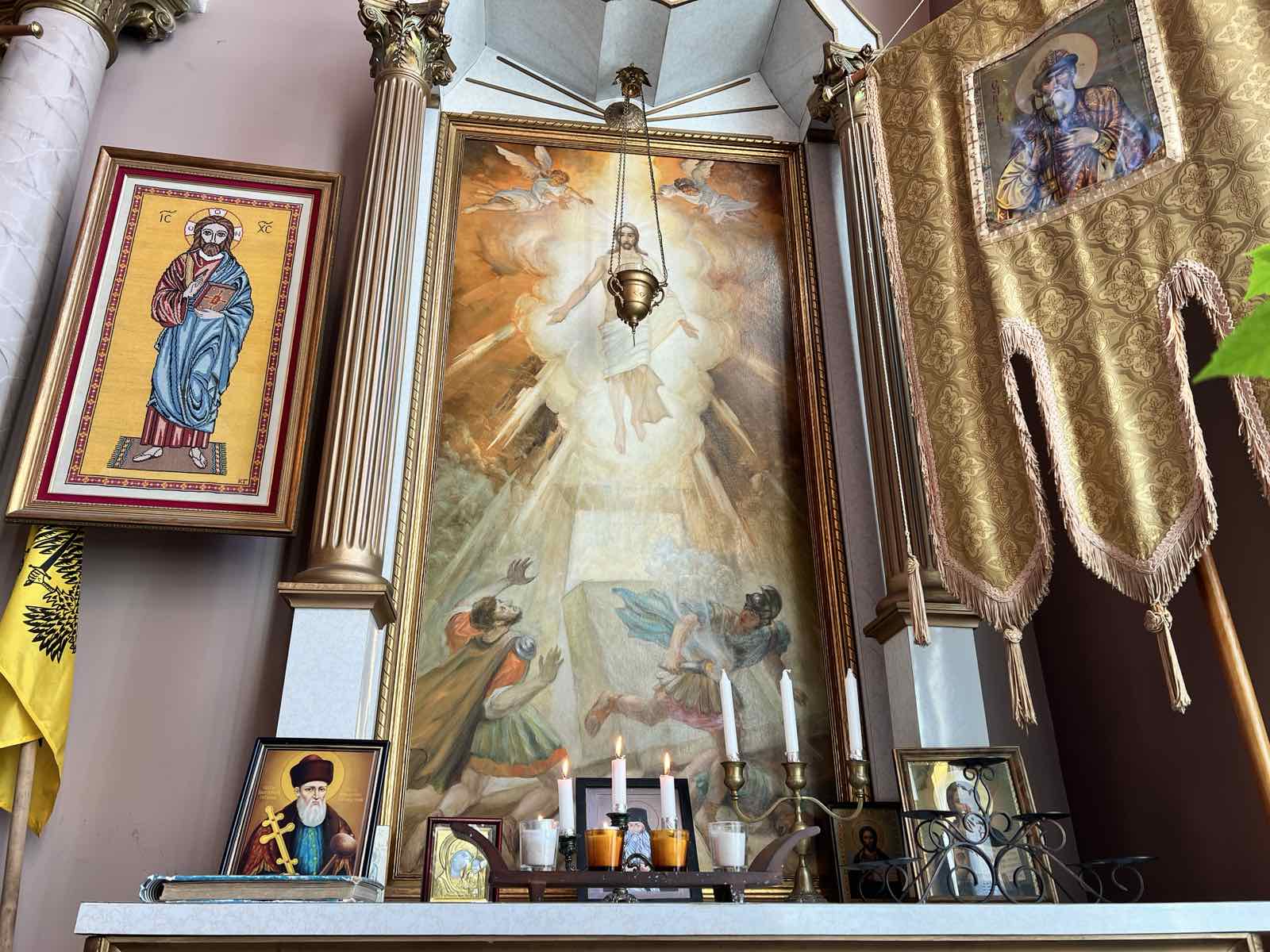
The Resurrection is crucial for the credibility of Christianity and we will now take a closer look at this topic.
During Jesus’ time and even in our own time, the feeling is that, of course, we know that resurrection does not happen. The Jews, on the other hand, had developed specific views on resurrection. The Jews, in the main, believed that God’s people would be raised from the dead at the end times.
For us, the term resurrection implies life after death. However, this was not the main meaning of the term in the ancient Jewish world. You die and are bodily dead, and then you are resurrected which means you start a new bodily life.
But even within Judaism, there are differences in views on the resurrection. The Pharisees, who represented the majority of the Jewish population of the time, believed in the resurrection. However, the Sadducees, did not believe in any post-grave life at all. It is also interesting that the first generation of Christians believed in a bodily resurrection but they introduced several modifications to the Jewish beliefs. Comparing and contrasting Jewish and Christian beliefs at that time is very instructive and we will proceed to do just that.
The first was a startling statement made by Christians that the resurrection had already occurred but not to God’s people in general but to one person. This was a radical innovation because we have no evidence that this belief, of one person being resurrected before the end times, existed within Judaism.
Then there is the matter of the resurrection body. Some Jews believed it would simply be a reconstruction of the present physical body. Others, such as the prophet Daniel, thought it would be a shining body akin to a star. But early Christians did not subscribe to either of these views. They thought of the resurrection body as one which somehow had been transformed in such a manner that there was a continuity and a discontinuity with the present body.
Christians such as Paul envisaged a new sort of physicality that is definitely bodily in the sense of being substantial and visible, but now transformed so that it was no longer open to pain or suffering or death. This was something new and novel when compared to the Jewish views prevalent at the time.
Another major change between Jewish views and those of Christians regarding the resurrection was the fate of the Messiah. In Judaism the Messiah does not die. But for Christians the death of Jesus was front and center to their proclamation of the Good News.
For Judaism, resurrection was almost a symbolic representation of the end of exile. The Babylonian exile and the Roman conquest and subjugation of Israel made a deep impression on the Jewish psyche. The concept of the resurrection was something that offered hope that this exile was to end. For Christians, this idea of exile and resurrection as freedom from political exile was non-existent.
Christians see resurrection as a participatory action in the present. We experience it through baptism, through loving our neighbor, through our contribution to making the resurrection a reality in the present life as opposed to something in the future. The other interesting thing is that within Judaism, resurrection was simply one of the teachings without any central importance. Within Christianity, resurrection becomes the central doctrine which defines who Christians are. Without the resurrection, there is no Christianity.
Early Christians argued about many things – whether to follow Jewish law, whether circumcision was necessary for Christian males, and other bones of contention, but there is no argument over the question of Jesus’ resurrection and resurrection in general.
What I have tried to point out is that Christians held onto a new conception of the resurrection, one which found its support in prophecies of the Old Testament but which, at the same time, differed from certain Jewish beliefs and practices. The question that arises is: why was this the case?
The widespread unanimity in belief that the Resurrection did in fact take place needs to be explained and the simplest explanation is that something earth-shattering happened in the early thirties of the first century. To listen to those Christians speak, they affirm time and time again, that Jesus rose from the dead and appeared and interacted with some of his believers.
There are hints within the Gospels and within the Epistles of the New Testament that they go back to a very early period of time. This is an important point because the very early reference to the resurrection shows that not enough time had passed for legendary accretions to creep into the Gospel narratives.
Remember that the very early believers and followers of Christianity were predominantly Jewish and they would try to portray the Gospel accounts in such a way as to be acceptable to the Jewish community. A natural Biblical source would be Daniel 12 which speaks of the resurrected believers shining as stars. Even Jesus quotes this in Matthew 13. But, none of the resurrection narratives speak of Jesus shining as a star. What happened with Jesus is so different from what was expected by Judaism of the time that it is hard to reconcile the Gospel narratives as something made up to accommodate Jewish sensibilities formed by the narratives in the Old Testament. Anyone writing fictitious accounts of Jesus’ resurrection would have made Jesus’ appearances more in line with what was expected. But, they did not.
Contrary to what has been stated that the Gospel writers were copying material from each other, this is contradicted by the analysis of the Greek of the Gospels. The original Greek in all four Gospels is quite different – the evangelists may be describing the same events but their words are quite different showing that they did not merely copy from each other but used their own words to describe the common events that they shared with their readers.
The other point I want to refer to is that there is no allusion to the Old Testament in writings which concern the resurrection. When it comes to Jesus’ death, there it is clear that Psalm 22, Isaiah 53, Zechariah and other Old Testament writings have been incorporated into the narrative about the crucifixion and even the burial of Jesus. But, when it comes to the resurrection, there is no reference to the Old Testament. Mention is made that Jesus was raised according to what the scriptures say, but no reference is ever made about a specific prophecy or saying. This implies a continuity but at the same time, a dawning of a new and unexpected event.
There has been a lot of talk about the dating of the Gospels. The discussion about the resurrection offers us an interesting perspective on this question. In the first letter to the Corinthians, chapter fifteen, Paul gives his most extensive discussion about the resurrection. He also lists the witnesses to the resurrection and yet, there is a significant omission in his recounting. This letter, is dated as no later than about 50 AD.
But you will notice that there is no mention of women as witnesses to the resurrection in Paul’s letter to the Corinthians – they had been airbrushed out because women were seen as non-credible witnesses.
This is in stark contrast to all of the Gospels where women – and particularly Mary Magdalene, of all people – played a central role. This testifies to the veracity of the reports written up in the Gospels because the early Christians would not have invented the resurrection account centered on the role of women.
There is another curious aspect of the resurrection accounts in the Gospels but not in the Epistles. The evangelists do not say that Christ has been raised and you will be as well. They see the resurrection as a vindication of Jesus’ claim to be the Messiah and, in fact, the one who does what was expected of God. The focus is on the beginning of the New Creation – notice the beginning of John’s Gospel which echoes the early chapters of Genesis – and this, again, underlines the fact that the Gospels are very early documents that have not been subjected to a reflection of what all this means for each of us. This point does come out in the Epistles. We find this clearly stated in Paul’s writings that Christ is risen and so will we be.
The Gospels convey an air of puzzlement which arose with Christ’s Resurrection and they did not have, at that time, the ability to discern the significance of this puzzling event for them.
From what I have said – and much, much more could be added – the very earliest Church believed in the actual physical raising of Jesus from the dead. There must have been an empty tomb or this would have been used as a counter-argument to Christian claims. But an empty tomb on its own was insufficient because the claim could have been made – as it was by the Jewish authorities – that Jesus’ body was stolen. The evidence against this was Jesus appearances and interactions with his disciples.
I will stop at this point.
Sincerely,
Bar-Abbas