Dear Theophilus , (Letter 44. )
As I promised you in the last letter, I will consider each of the points I had mentioned in the last letter and expand each of them with examples.
I would like to address item one – God answers, but not in the way that we expected. There is a gentleman whom I know for whom prayers have been offered because he has a terrible disease called amyotropic lateral sclerosis. This disease is commonly called Lou Gherig’s disease in memory of the baseball player who came down with this condition. This is a terrible condition where the patient is fully conscious and suffering mental anguish and loses muscular control within the body. On diagnosis, many people with this illness die within a year. Prayers have been offered for this man for over 5 years and he still survives. Maybe God is answering not with a complete remission of the disease , but a gift of the extension of life.
Another example that I am sure you are all familiar with happened in 2014 when Russia invaded Ukraine. This was an obviously unfair battle of over 700,000 Russian soldiers, armed to the teeth and the remnants of the Ukrainian army which were somewhere between 5,000 and 7,000 poorly trained and even more poorly equipped soldiers. Ukrainians raised their prayers to God and we can all see now God’s answer. Yes, the war goes on but the Russian army has been stopped by those amazing Ukrainians who stood up to the second strongest army in the world and held them off. As a side comment to this war, ironically, 2014 was the two century commemoration of the birth of Shevchenko, the poet who spoke of and prophesied Ukraine’s independence and his prophecy and prayers came true in the twentieth century. Maybe there is something to the statement that the pen is mightier than the sword.
In retrospect, it is interesting to see parallels here with the story of the struggle between the Israelites and Pharaoh as seen in the Exodus. Pharaoh’s judgement was blinded so that he could not act decisively to defeat the Israelites. He had the military power and the resources but he failed in his efforts to overcome the Israelites and keep them longer in bondage. Putin, was so close to achieving his goal of enslaving Ukraine, that one is dumbfounded as to why he failed. In both cases, God’s invisible hand comes out in the results and acts as an answer to prayer.
To the second point – we are to be part of God’s answer to prayers. We may complain that God does not hear and shift all of the blame onto God who seems indifferent to the needs of his creatures. But we also have a role to play in this drama and it is, to comfort those who are ill and to offer them support in their time of need and to be there for them and this is one way that we enable God to answer prayers. We are to be active and do something – we are to be God’s answer to these people in need.
And through it all, we raise our prayers in the clear certainty that the world is not as it should be. We do not acquiesce to the state of affairs. When we pray and it seems we are not being answered, by continuing to pray we are avering that indeed things are not right – they need changing.
Our prayers have an eschatological component that says God’s creation project will not fail. It will reach its ultimate goal in the eschaton. If we were to stop praying because we were discouraged, we would be essentially saying that things are as they should be and will not change. We will have given up.
For my third answer to the question of suffering, I turn to the Apostle Paul.
“I now rejoice in my sufferings for you, and fill up in my flesh what is lacking in the afflictions of Christ..” (Col 1:24)
When one reflects on Paul’s life, one is struck by the persecution and suffering that he underwent. But in spite of this – and he fully acknowledges his travails – he is still filled with hope and faith.
People often ask – why me? My suffering makes no sense and is pointless, and the answer that Paul gives is that you suffer for others so that their suffering may be lessened or even taken away and in this manner, no suffering is pointless and without merit. This is a profound answer to the problem of unmerited suffering that we started to consider with Job.
We, humanity, had to await the coming of Christ in order to understand this teaching, a teaching which was embodied in the life, and death and Resurrection of Christ through which we become ‘little christs’ and are called on to aid in the completion and redemption of the creation project. It is not that we claim a divine status but we acknowledge that we are active participants in seeing God’s creation project come to fruition. We are putting on Christ.
Anyone with eyes can see that something is terribly wrong with this world – and this is underlined in bold letters for us through suffering, pain and death – and that something wrong is something which we refer to as the Fall. Our taking on of suffering, sometimes unmerited and therefore, puzzling, is part of the answer to righting this fallen world and an expression of our love for others. As Charles Williams, the English writer stated – none of us paddles our own canoe; we paddle each other’s canoe. Yes, we all live for and suffer for ourselves but, also, for others and in their place.
Humans ask, quite normally, why is there anything at all – a question that science is powerless to answer or even address. But a further question is why are things the way they are. However, asking questions is not the whole story but the beginning because it should cause us to reflect and see how the possible answers to our questions affect how we live. What does it mean to live in the world that we have been discussing? How does it impact on our relations to our neighbor? How can I change?
I go back to Habakkuk who wrote about 600 years before Christ:
“You will be revealed when the time comes….
For though the fig tree will not bear fruit,
And there are no grapes on the vines;
The labor of the olive trees fail
And the fields yield no food.
Yet I will glory in the Lord;
I will rejoice in God my Savior.”
Habakkuk prophecies that our redemption will come – You will be revealed when the time comes. Habakkuk is completely realistic and cognizant of how our world behaves. He does not view the world through rose-colored glasses. One cannot accuse Habakkuk of wishful thinking. But it is clear that he operates with the power of faith and trust in God and this is what is asked of us – to trust God and to trust that He has the situation in hand. In whatever He undertakes He succeeds and we can rest assured that He loves His creation and will not see it fail.
It is easy to fall into despair and feel that God does not hear us but our reply is one of trust and hope and with Christ’s Resurrection we have even more cause for this than Habakkuk. We have more grounds for being hopeful.
The pain of the world and humanity is deep and widespread. It may not be obvious in our world, but it is the deep and mysterious truth that underlies much of the suffering that we see around us – that God does hear us and He does answer in the ways that we discussed above, and possibly in other ways.
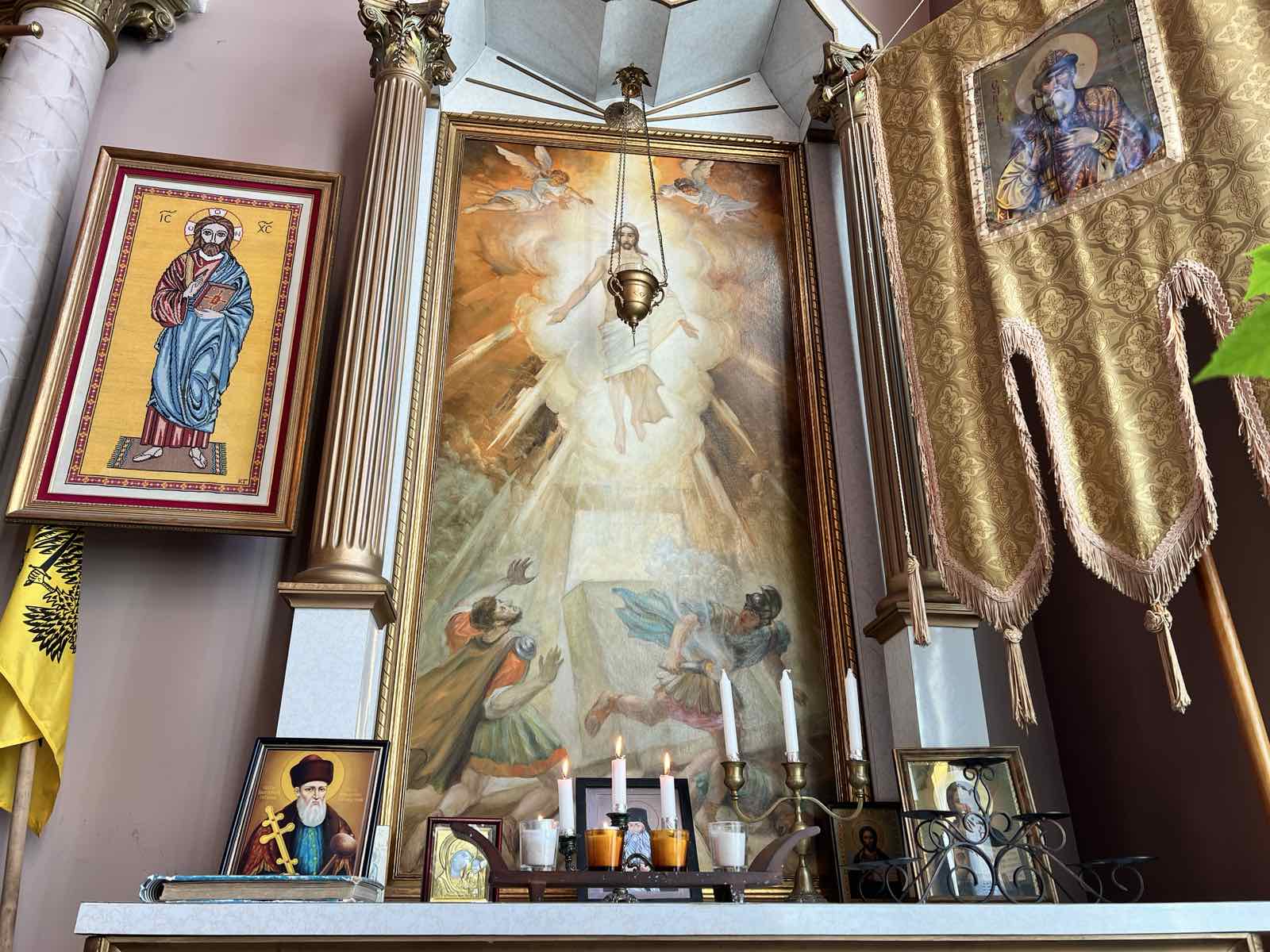
In Paul’s first letter to the Corinthians, chapter 15, he gives his most complete discussion on the Resurrection. And there, towards the end of this discussion, we would expect a glorious description of what Resurrection life will be like. But he comes forward with an almost anti-climactic statement – everything that is done for God’s glory will be saved and will find its eternal being in the New Creation. No discussion of crowns of glory, no spectacular description of our new bodies.
We often think of the Resurrection in a strictly, almost individualistic manner where Resurrection is our reassurance that we survive biological death. But what Paul is pointing out is that the Resurrection is a far richer and more encompassing concept. It includes the redemption and salvation of everything, of the whole cosmos – even the seemingly most mundane. It is the realization that the creation project is not just some backdrop for human destiny, but is at the heart and center of God’s loving concern. Taking this wider view of the Resurrection will most assuredly cast a different light on our own sufferings and challenges, as it did for St. Paul.
Sincerely,
Bar-Abbas