Dear Theophilus , (Letter 22. )
We live, as I have stated before , in the time of Saturday, a time of painful ambiguity which cries out for resolution. We thirst for a palpable presence of God as described in the book of Isaiah where Isaiah says that the one helping the Israelites is not some angel but God Himself.
Forgiveness is the currency of the New Creation and this shows that we are not conditioned by the evil done to us. Forgiveness is a powerful signal to us that all shall be well.
One of the things that I have tried to highlight for you is how much of our view of Christianity has been colored by medieval concerns about judgement and about trying to end up on the right side in this matter. There is some truth in this view but it is not really central to our faith. One of the important issues in scripture is that with the coming of Jesus Christ heaven and earth have come together and will remain together forever. As one of the dramatic signs of this are the healing miracles which signal the coming of the Kingdom of God. Through the miracles, we are allowed us to see the future Kingdom. The gift of the Spirit enables us to follow Jesus and it is this Spirit who makes the future real and alive for us and enables us to live by the rules of the New Creation. True, we do not live in the historical times of Christ but now it is scriptures that enable us to see heaven and earth coming together.
Much of the scepticism that sometimes engulfs us is our understanding of truth. We still live with the aftereffects of the Enlightenment which put forward reason as the final and only arbiter of what is or is not true. What we should realize, and this is where the importance of the arts comes in, is that truth is much more nuanced than sheer facticity. It can be expressed in forms other than facts. It can sometimes be spoken of through poetry and story and art and all of these give a deeper sense of the truth.
The truth that is being expressed in the scriptures is that at Jesus’ time it was obvious that most prophecies had not been fulfilled and the Old Testament was a story in search of an ending. In the words of Wittgenstein, a Jewish philosopher at Cambridge, Judaism is a body in search of its head. With Jesus, the landscape started to change dramatically in terms of completion of the story. It was seen that the present age and the age to come had overlapped and one of the signs of this was the admittance of gentiles into the story of redemption. This is an important point and it is why Paul is so adamant that gentiles be totally accepted within the new community without a need for them to convert to Jewish practices. This was all in keeping with the fact that all of creation was awaiting its exodus when the separation between heaven and earth was to be undone. The early Christians were witnesses to God’s righteousness which means his faithfulness to his promises made to the prophets. These promises were now being actualized and the new era was beginning. Now the sign of membership in the people of God was not an adherence to laws on food and other proscriptions but it is now faith in His chosen Christ, Jesus. Each member of the community is called on to bring in one segment of the universe under the total rule of God, to transform one part of the universe into the new creation – us.
Christianity brings with it a focus on the reality of life after biological death. For Christians, now, death is seen as the beaten enemy. What must be emphasized is that Christians did not see at death some spiritual component passing away and leaving the empty husk of the body. In this case, death is still a victor because it has torn apart the physical and non-physical components of a human being. How confusing it is to hear, as we often do at funerals, that the death of the deceased was God’s will. Christianity declares clearly and loudly – death, or anything to do with death, is not God’s will and Christians are not fatalists. It is not God’s will that people die! So what can we say about Christian hope?
It is often said that the deceased has gone on to heaven which is our final destiny. It is interesting that in John’s gospel, he writes of Christ speaking of the fact that my Father’s house has many dwellings. The word used for dwelling in Greek is moné, a word which denotes a temporary lodging or inn. In a sense heaven is not the final destination for humans. Heaven thus, is not our final destination but the hidden dimension which is God’s dimension. This is the destination of our ‘soul’ which unfortunately because of Platonic influences, has taken on a spiritual connotation as opposed to the physical part of humans. In the Aramaic of the New Testament, soul refers to our essence, that which defines our being, that which grants us our uniqueness, that which is our whole personhood. In heaven, we await for a new bodily existence which will come with the Resurrection in the remade world.
An unfortunate misunderstanding has arisen with certain expressions that Paul uses. He speaks of the physical body and also of the spiritual body and the conclusion has been drawn that the spiritual body is non-material. This is not quite what he intended. By physical body he means a body animated by the human soul and the biology of this world. By the future spiritual body he refers to a body which will be animated and enlivened by God’s Spirit and as a result will be incorruptible. Our present animating power fails us and we die. The spirit-directed body is guided by pneuma and will not fail us. Flesh and blood cannot inherit the Kingdom of God. Paul brings this up in order to point out that the question isn’t between physical and spiritual but between corruptible (bios driven) physicality and non-corruptible (pneuma driven) body.
God will remake His creation; He will not abandon it. This is all hard to take in and even the Apostles were clearly puzzled by this talk of Resurrection and what it means. The empty tomb shows that indeed God does not abandon matter that He created and loves but uses it as the base material for the New Creation. Remember that for Judaism, the Resurrection was not a central concern for most of Israel’s history; for Christianity, the Resurrection becomes central and without this teaching, Christianity loses its major reason for being.
The presence of death in creation underlines the transience of nature and this nudges us to see that creation is incomplete, there is something important missing in it. The healing miracles, as John points out, are signs that the New Creation, which will perfect the Old Creation, is already making its presence felt. Salvation is not, as is popularly assumed, going to heaven but being raised to a new life in God’s new heaven and earth. The redemption of matter is already being experienced by us in the sacraments.
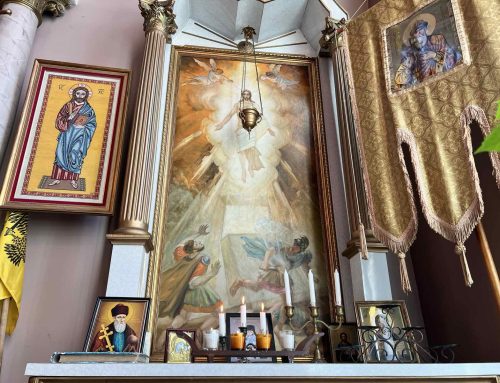
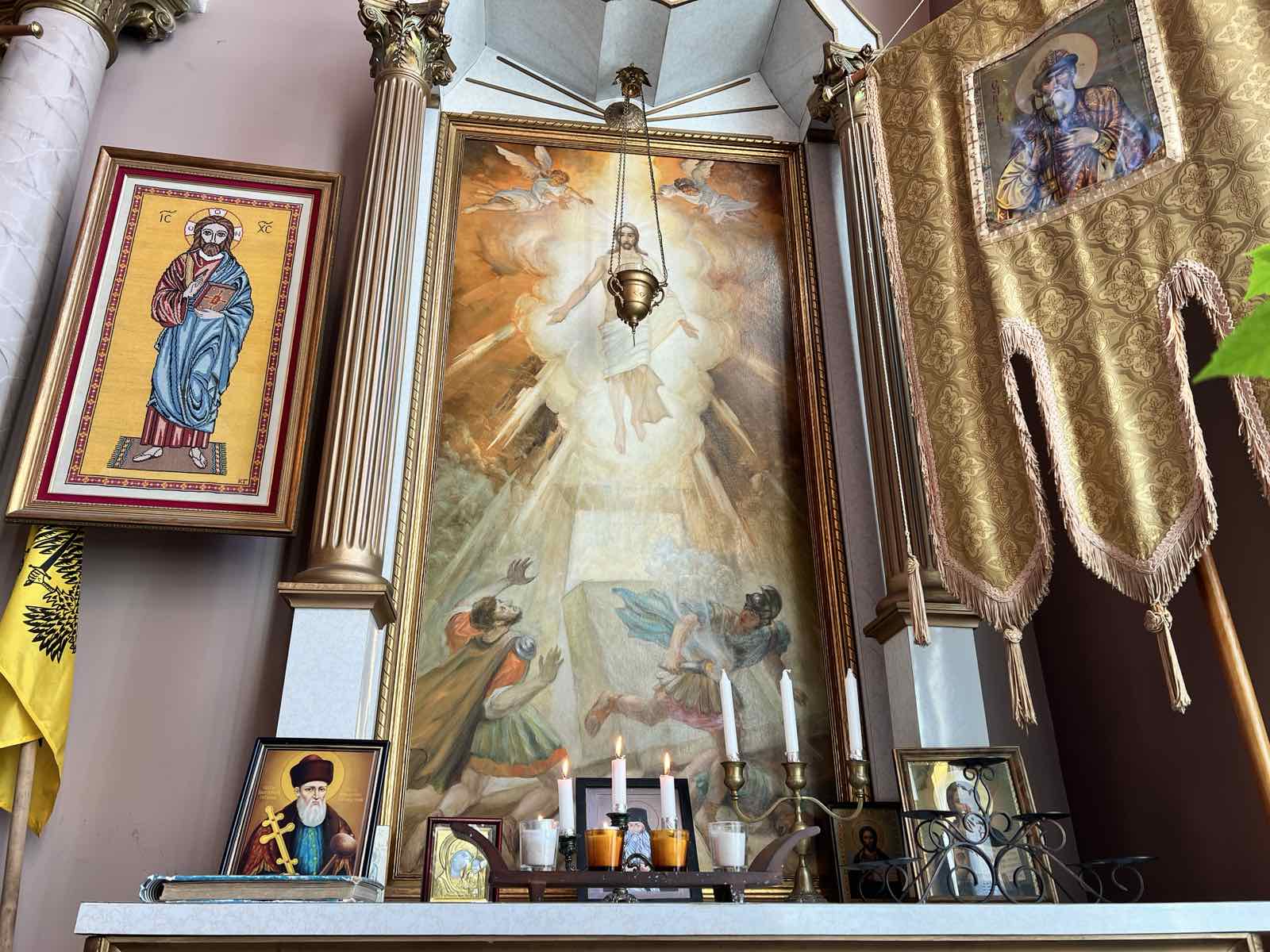
There have been recent suggestions that just as our concepts of time are lacking so is our view of space. The accepted view is that space is a receptacle into which objects enter. But there are other, more productive ways, of talking about space. We now see space as relational giving objects a location where they can relate. And this ties in with the idea that heaven and earth are two different dimensions of God’s creation. The ascension then is not some strange occurrence whereby Christ, like some first century spaceman, rises into space. Instead, as the Celtic tradition teaches, there are ‘thin’ places between heaven and earth where the separation is very limited and it is this picture that we can use to portray Christ’s ascension. We describe it pictorially as ascending but we can also see it as Christ passing into this other dimension which we call heaven.
There is another significance to the Ascension. With the Ascension we have the release of the Holy Spirit onto the created order and what this does is enable Christ to deal with each and every person which would not have been possible through only the body that walked the streets of Palestine. There is an interesting reference to this in Oscar Wilde’s Salome where he writes: “Where is this man? demands Herod. He is in every place but is hard to find.” It is a pity that not enough attention has been paid to the important role of the Spirit (how many prayers are there to the Holy Spirit? The answer to this underscores what I am saying). And the significance of the Ascension is something as well that has been passed over without exploring the deep theological teaching here.
Sincerely,
Bar-Abbas