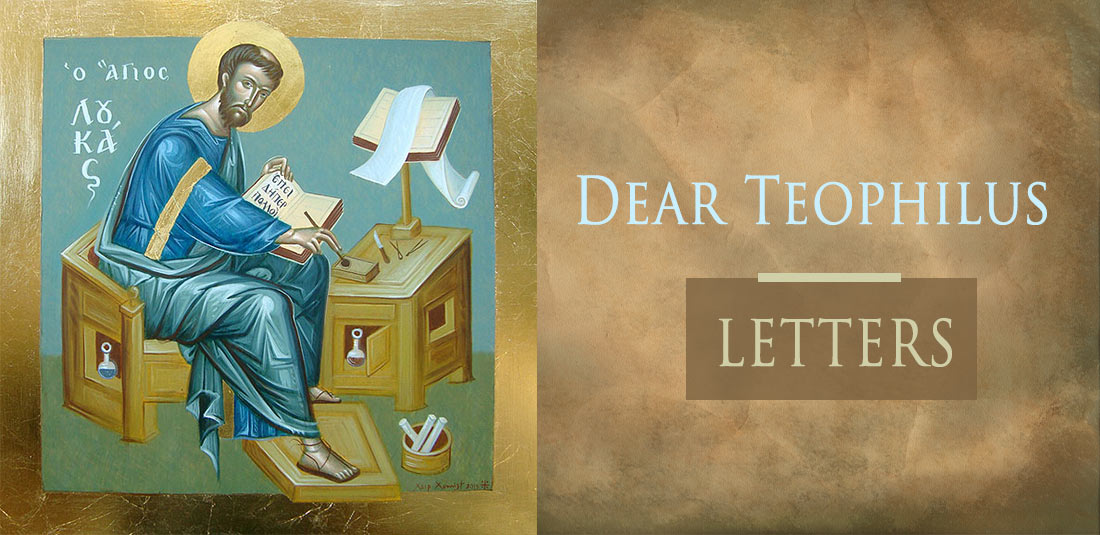
Dear Theophilus , (Letter 64. )
One of the terrible consequences of evil is that it isolates us from others and from God, or so it seems to us. Silence seems to envelope us as if God can no longer hear us. But there is a deeper and richer undertext to silence.
Silence exposes those who are truly able to love. St. John Climacus
One of the imprints of death on a human life is the silence that it places on the once living human being. And the Holodomor of 1933 silenced many people for no other reason than that they spoke words in a language which was branded as unacceptable.
The word plays a central part in Christian theology.
Silence is the source from which the Word is born.
Guido, a Carthusian Monk
In the beginning was the Word,
and the Word was with God
and the Word was God. John 1:1
But we can see that even in everyday speech, silence plays an important role in the very act of separating words and giving them meaning. When we look at the Gospels, we soon realize that Jesus’ silences play a central and crucial role. Through them he reminds us that God works in obscurity and hiddenness. The conception, birth and death of Christ are all worked in the silence of God. He chooses to act in what is perceived as weak, obscure and a failure by the world.
In our pain and bewilderment we often turn to God but are met with silence, a silence which seems to call into question as to whether God exists at all. But we must keep something in mind. The pain in the world is a stark reminder to us that our ultimate joy and redemption is not of the substance of this world, that God and His gifts are not identical. We need to be constantly reminded that the absence of the good gifts of this world – including biological life – does not indicate the absence of the source of these gifts. But it should also be underlined that we are not called to stoic acceptance of our fate.
Be poor, then, so that your help is in God alone. Psalm 131:25
The sufferings that we encounter in life are there not to teach us morality, nor endurance, but are given to us so as to remove the false vision that we have and to see the fallenness of the world, to see the true condition of our alienation from God. It is true – suffering shatters human self-confidence for we see that ultimately our fate does not lie solely in our hands but lies in the hands of God. But God does not leave us bereft of hope for He, in the Second Person of the Trinity, has gone before us into Hades, into the depth of human suffering.
The assurance that upholds us in our suffering is the life of Christ. He suffered dereliction; He suffered pain; and He descended into human death to embrace that which awaits every single human being. He has completely demolished the connection made by humanity that suffering is always a punishment for misdeeds. He has shown that suffering can indeed be a result not of guilt but of innocence. He has shown that suffering and death are the inevitable products of fallen humanity and He has shown, through the Resurrection, that the final word does not belong to abnegation but to glorification. He has stripped us of our illusions about this world showing it in all its violence and hatred, but he has not left us denuded and hopeless, but has substituted the falseness of the fallen world with the reality of love and the Resurrection.
Death seems so final and conclusive. It seems that it shuts a door which is closed forever and we grieve because of this. But, when we experience the seeming finality of death, we are experiencing a lie. Nothing is final in this cosmos of ours – everything changes. By thinking of death as final and unchangeable, we are creating an idol out of death. Death does change as well and the supreme change occurred through the Resurrection whereby death has been changed forever. From a cul-de-sac, death has become a passage opening onto a new reality.
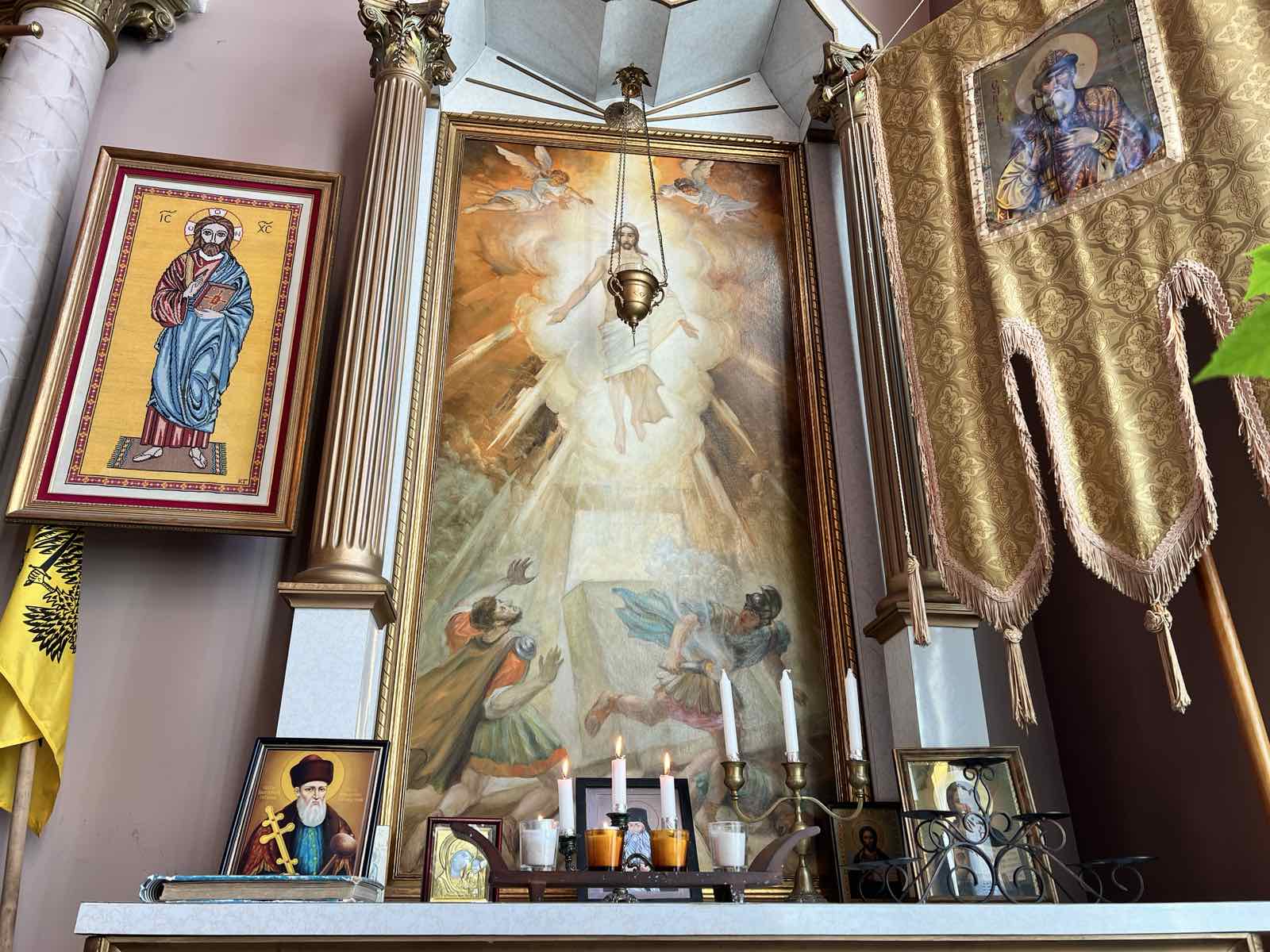
And notice again – the very act of Resurrection takes place in silence without witnesses to the actual process. Out of the silence of the grave, the Word is reborn.
The communication
of the dead is tongued with fire
Beyond the language of the living. T.S. Eliot
Silence is a mystery of the world to come.
Abba Isaac the Syrian
We must deal with words in this creation and they are important and necessary to us. But we must also beware of the words turning into idols, as if they can encompass and trap reality in a frozen grasp of seeming understanding. The essence of creation is mystery and we must be continually reminded of this and be open to this. And this is where silence comes into play – it acts as an antidote to our over-attachment to words.
Silence is not ignorance. It does not proclaim that we do not know. Silence is simply another way of knowing that pays tribute to the wonder of creation. And the dead point this out in their silence. They point us to the mystery of being, to the mystery that is death, to the mystery of the fallenness of this world.
…the resistance of silence can serve as a forceful
‘no’ to everything that violates peace. Patriarch Bartholomew
The victims of the Holodomor may have been silenced but their suffering has given them a new articulation. Through their suffering they speak to us of a world that has lost justice and mercy and love. They speak to us of the inhumanity of man to man, and to creation in general. They speak to us not through words, that may sometimes be misinterpreted but through the iconic image of their death. In their dying they may lose their voice but they speak at a level that is deeper than any words.
Through the flow of our tears the sterility of the desert is made to bear fruit.
Orthodox Service Book
Pain can and does bring positive fruit and suffering can enrich not only those who undergo it, but others as well.
In our busy and frenetic world, we shun silence and exile it with a barrage of noise, of sounds whether emanating from radios or television or the constant din of our busy cities. In a sense, we are afraid of silence as if all that silence is, is emptiness. Silence becomes for us a symbol of death, and in our ‘death-denying’ culture we flee from silence. But, in a very deep sense, silence is not emptiness but fulness, not death but an invitation to take a closer look at life and to listen to its mysterious language which at its very depth does not use words but silence.
It is ironic that our culture is ‘death-denying’ because we try to hide every vestige of death under layers of symbols that want to make death not be. And when we are faced with the Holodomor, we are at a loss as to what sense this can possibly have. We have denied death and as human psychology has shown, those processes that are repressed within us into our depths, can and do come back with vengeance at us. We deny death, but at the same time we revel in it as any glance at literature will tell us.
When we consider the Holodomor, it is not only to be aghast at the vastness of the crime and its horror; we are called, at the same time, to see more deeply, to try to discern God’s presence in the murky chaos of horror. We are called on to make out His form and we see through a darkness, with faltering eyes, the outline of a body on a cross. And God is there, to be discerned by the eyes of our hearts, to be discerned through faith and love and hope, and also, through the silence that we encounter. He may be silent, but He is there and His silence speaks much more than the many words that we utter.
Silence symbolizes a posture of waiting upon God and listening to His Spirit and in this sense, it shows not an absence but a Presence. Silence, therefore, paradoxically is a term that points to a relationship that even death cannot destroy. It shows that even in death, God is till in charge and this gives us hope since we are continually in God’s hand, even in the direst of perils. Our very existence is proof of God’s existence because without God, we would return into the nothingness from which we came. Always remember, what God says in the silence is that He loved us even, mysteriously, before we were.
Sincerely,
Bar-Abbas